
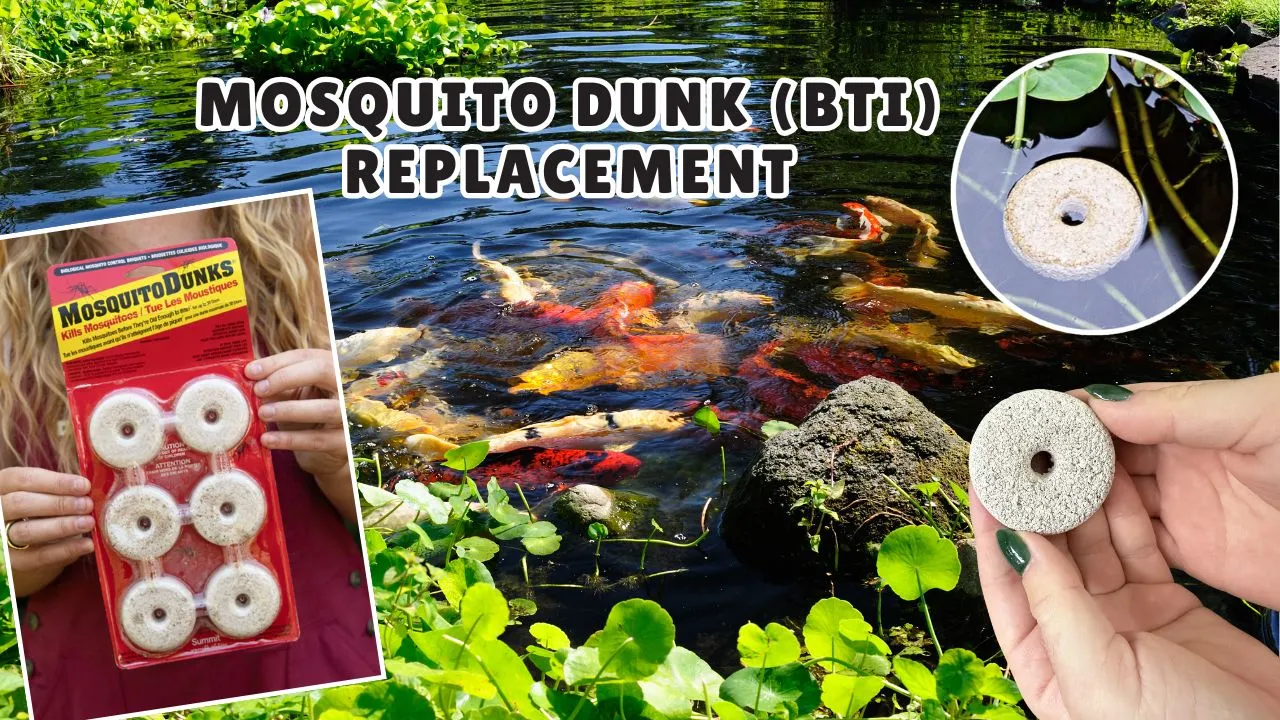
Going after mosquito larvae in stagnant bodies of water, like backyard ponds, can be tiresome. They can quickly breed and multiply. Mosquito dunks which contain Bacillus thuringiensis israelensis (BTI) prove to be a safe and effective method of providing mosquito larva control in stagnant water.
However, it is common for pond owners to be confused on whether having an aerator in the pond that circulates water continuously alters the replacement frequency, and hence how often one should replace mosquito dunks in aerated ponds.
This detailed article will address everything you need to know about replacing mosquito dunks in aerated ponds. It covers the key concepts of BTI, the various factors determining the lifespan of BTI dunks, the role aerators play in dunk effectiveness, and tips for better mosquito control in ponds.
Understanding BTI Mosquito Dunks and How They Work
BTI Mosquito dunks are doughnut-shaped tablets that release BTI, a bacterium that specifically targets and is harmful to larvae, gradually. The BTI dunks disable a mosquito’s lifecycle in the larval stage by the ingestion of BTI-larvicide. The larvae seems to eat and die in 1-2 days, which is essential to prevent the emergence of adult mosquitoes.
It is crucial to point out that BTI dunks are harmless to fish, pets, birds, and even plants and humans, which makes it fantastic for water gardens and other sources of potential stagnant water.
How long do mosquito dunks last?
Under average conditions, one mosquito dunk can give effective larvicidal action in stagnant water ponds of 100 square feet for a period of up to 30 days. This is because the BTI (Bacillus thuringiensis israelensis) works gradually; if replaced on a monthly schedule, it provides uninterrupted protection.
Impact of Aeration on Mosquito Dunk Longevity
Aeration is the addition of oxygen into the pond, leading to the movement and diffusion of water as well. While the majority of the ponds greatly benefit from having no stagnant waters, which mosquitoes prefer, having aerators does have some influence on the rate at which mosquito dunks dissolve.
- Water circulation increases dunk dissolution: The physical dissolution of the dunk BTI is faster because aerated water is in motion.
- Improved BTI distribution: The even spread of BTI bacteria is guaranteed, enabling greater mosquito larvae exposure and better control.
- Shorter effective duration: The period of protection is reduced to a little under 30 days influenced by the increased consumption rate of dunks in aerated environments.
In short, while aeration improves BTI distribution, it does negatively impact dunk lifespan. Pond owners with aerators should monitor the frequency of dunk replacement to ensure consistent mosquito control.
How Often Should You Replace Mosquito Dunks in Aerated Ponds?
Most specialists and mosquito control product manufacturers suggest that mosquito dunks should be replaced every 30 days throughout the active breeding season. This is the case even if the pond is aerated. This approach achieves the best results with aerated ponds while maintaining minimal gaps in mosquito larval control and ensures the following:
- Consistent larvicidal activity: Dunks will continue to release BTI (Bacillus thuringiensis israelensis) at the appropriate levels necessary to eliminate mosquito larvae.
- Prevention of mosquito population rebounds: Monthly replacement targets new larvae as they hatch.
Aerated ponds, however, have the problem of faster dissolution. Pond owners may find it beneficial to check in on the dunks every 3-4 weeks and replace them when the dunk appears nearly used or no longer visible.
Visible Signs: Time to Replace Dunks Earlier in Aerated Ponds:
- Dunk size significantly shrinks or disappears faster than 30 days.
- Mosquito larvae (wrigglers) persist or reappear, suggesting reduced BTI levels.
- Pond water shows diminished BTI scent or presence (some users report a mild smell when recently applied).
In case any of these have been met, 3 week durations will replace 4 week intervals during peak mosquito season.
Factors Influencing Replacement Frequency
In addition to aeration, a variety of environmental and operational factors determine when replacements are needed for dunks:
- Pond size and dunk dosage: Smaller ponds or concentrated dunk application may need more frequent replacement.
- Water temperature: Warmer temperature enhances biological processes and dunk degradation which leads to more frequent application.
- Rainfall and water inflow: Torrential rains may dilute pond water which, in turn, lower BTI concentration, causing increased dunk replacement.
- Sunlight exposure: UV rays can degrade BTI and dunk tablets faster, shortening effective duration.
- Debris or algae buildup: Excessive organic materials leads to accelerated BTI degradation due to high microbial activity.
If you live in warmer climates or in regions with heavy rains during mosquito season, you will need to adjust replacement schedules.
Best Practices for Using BTI Dunks in Aerated Ponds
- Follow product label instructions: Ensure dunks are applied as directed by the manufacturer in relation to dose, frequency, and pond size.
- Place dunks away from strong aeration jets: Position dunks where water flow circulates but does not immediately wash the dunk surface away completely.
- Monitor for larvae: Skim the ponds weekly for the presence of mosquito larvae. Dunks need to be reapplied sooner if larvae are detected prior to 30 days.
- Complement with other mosquito control: Supplement BTI with aeration, fish, and vegetation management to form a holistic approach to managing mosquitoes in ponds, ensuring a multi-faceted and thorough strategy for eliminating mosquitoes.
- Store dunks properly: Place the dunks away from direct exposure to sunlight and moisture to maintain their efficacy.
Additional Tips for Mosquito Control in Aerated Ponds
- Install mosquito-eating fish: These and other species feed on fish larvae and positively contribute to BTI dunk larvae control.
- Maintain aeration system regularly: Clean pumps and diffusers periodically to ensure consistent water movement and oxygen levels, which helps reduce mosquito breeding.
- Remove standing water sources nearby: Mosquitoes breed in all stagnant water, so eliminate other potential larval habitats around your garden.
- Use mosquito-repellent plants around the pond: Citronella, lavender, and marigold can repel adult mosquitoes and reduce annoyance.
Summary: Replacement Frequency in Aerated Ponds
| Condition | Recommended Replacement Frequency | Notes |
|---|---|---|
| Non-aerated pond | Every 30 days | Standard product recommendation |
| Aerated pond | Every 3-4 weeks (20-30 days) | Faster dissolution due to water movement |
| Warm climate / heavy rain | Every 2-3 weeks | Environmental factors reduce dunk longevity |
| Signs of larvae return | Immediate replacement as needed | Check pond regularly to avoid mosquito resurgence |
Conclusion
Mosquito dunk replacement is a necessary chore to achieve effective larval control in ponds. Pond aeration leads to dunk disintegration and BTI distribution, which fosters more pond health. However, in aerated ponds, active management including dunk replacement every 20-30 days during peak season ensures uninterrupted mosquito control.
The most dependable, non-chemical mosquito control for your aerated backyard pond comes from a combination of physical measures, biological control, proper pond care, and balanced pond management. With mindful management of replacement intervals and pond conditions, a stunning, mosquito-free aquatic haven is possible throughout the season.
